Creating art is, for me, an internal conversation between intuition, color, line, and emotion. My drawings and paintings approach that conversation from opposite
Drawings
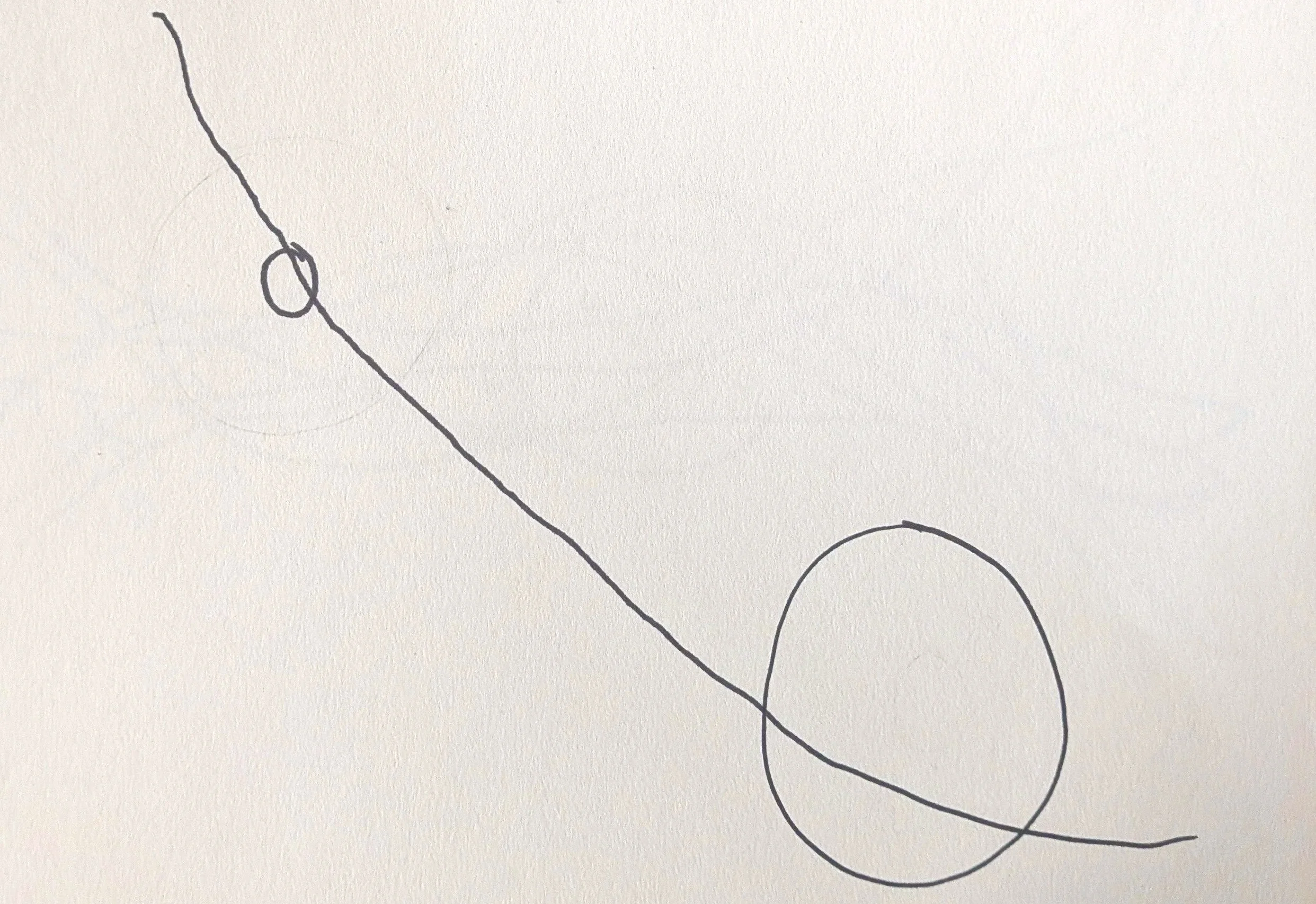
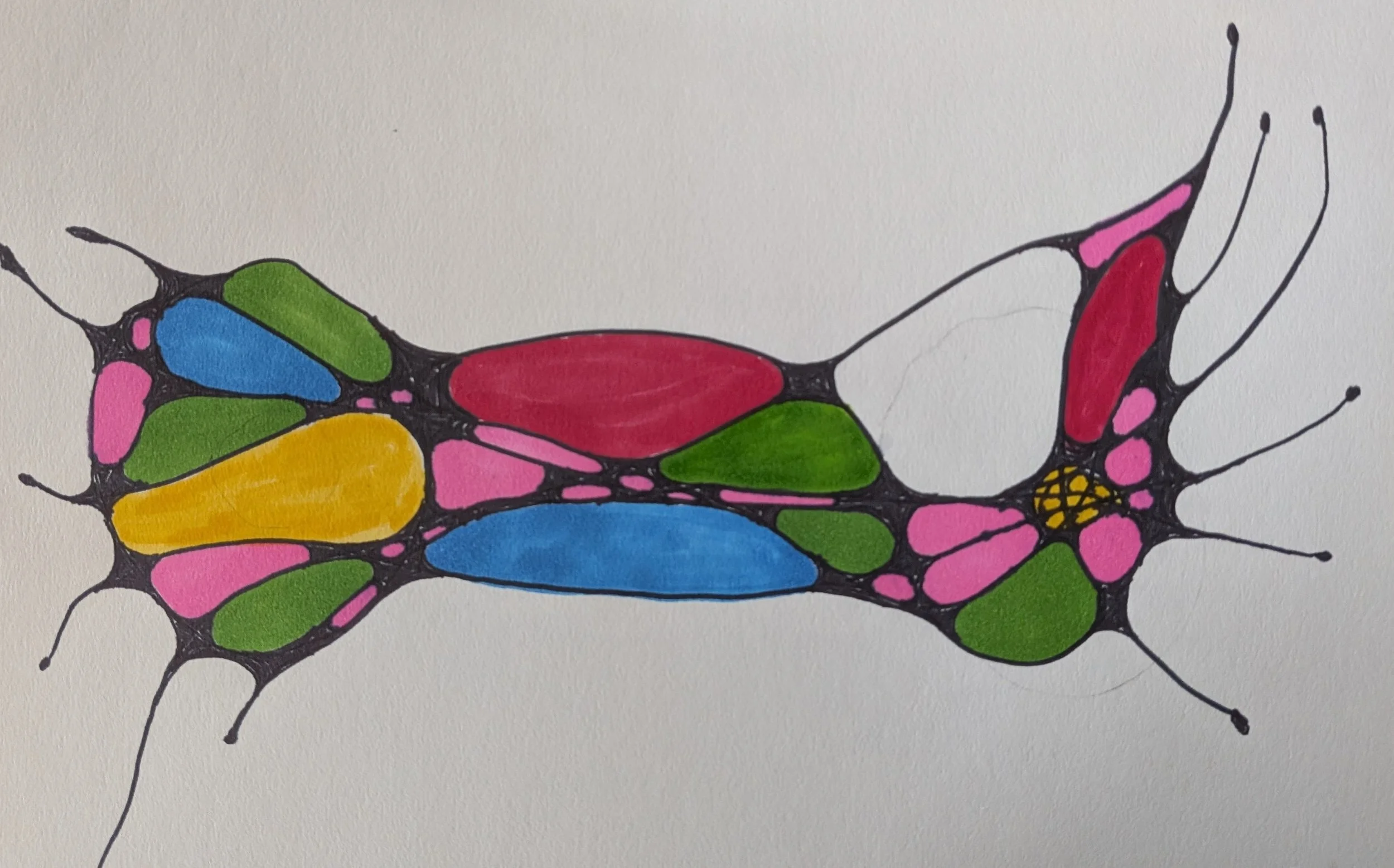
Each drawing begins with a thought, concern, or issue that feels larger than I am. On 9 × 12 professional drawing paper, I begin in pencil with two circles—one larger and one smaller. The larger circle represents the concern; the smaller circle represents me.
Working in permanent ink, I reverse the circles, drawing a large one around the small and vice versa, erasing the pencil marks.
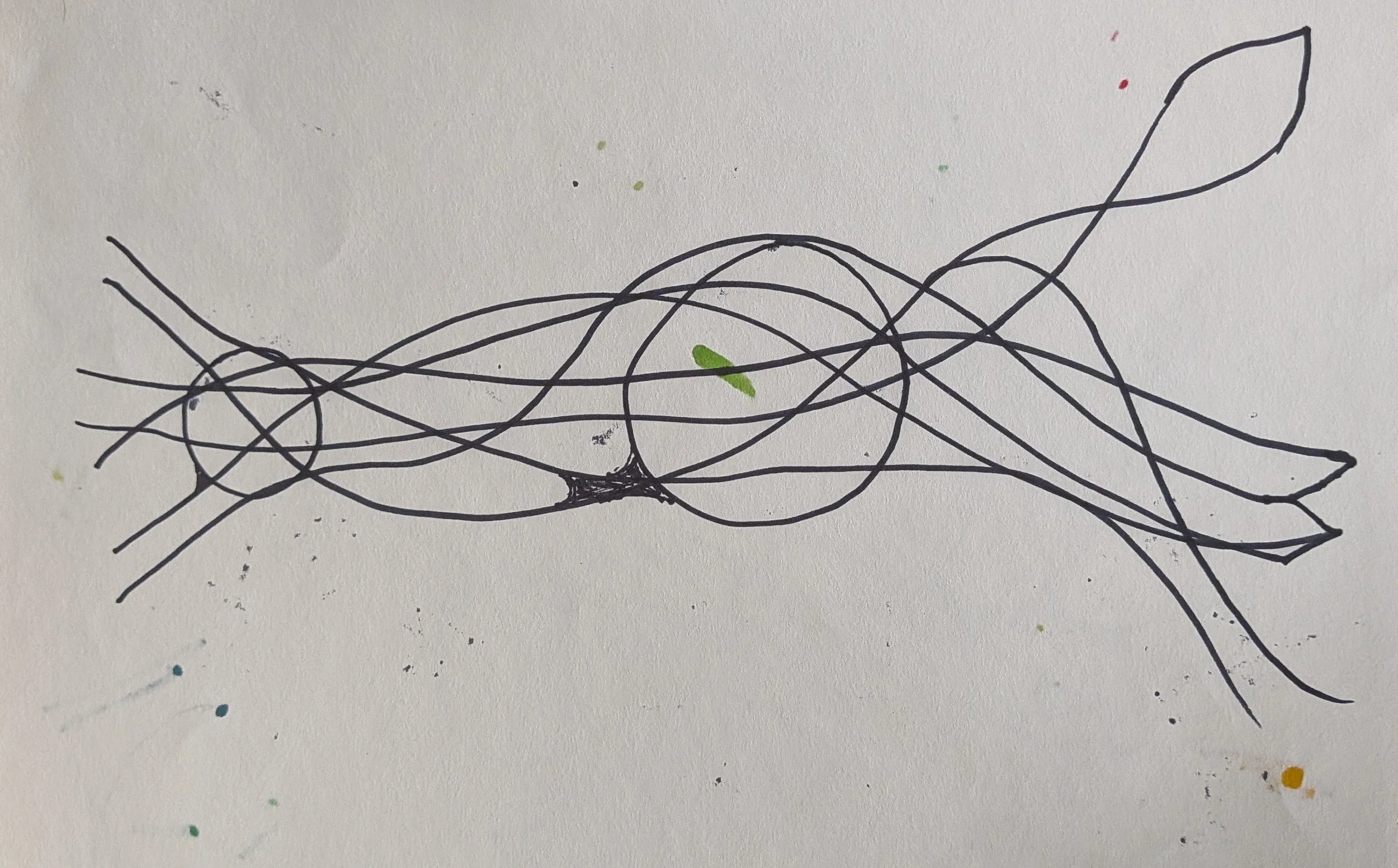
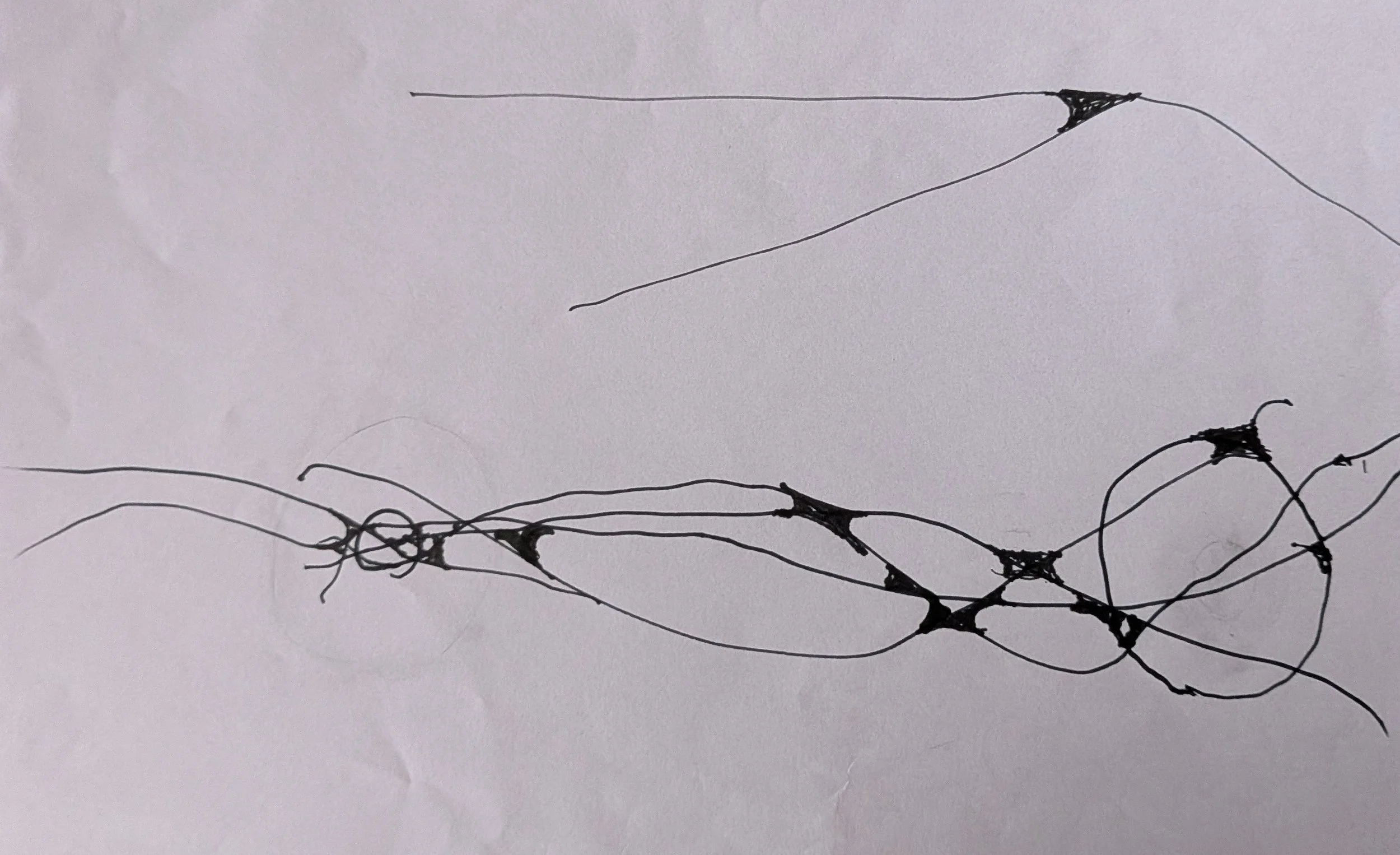
Then I begin creating lines that cross through and connect the two circles while thinking about creating a new neural pathway—one in which the large concern becomes smaller and I become larger in relation to it. I draw at least five lines, often many more, allowing them to cross, connect, and flow freely across the page.
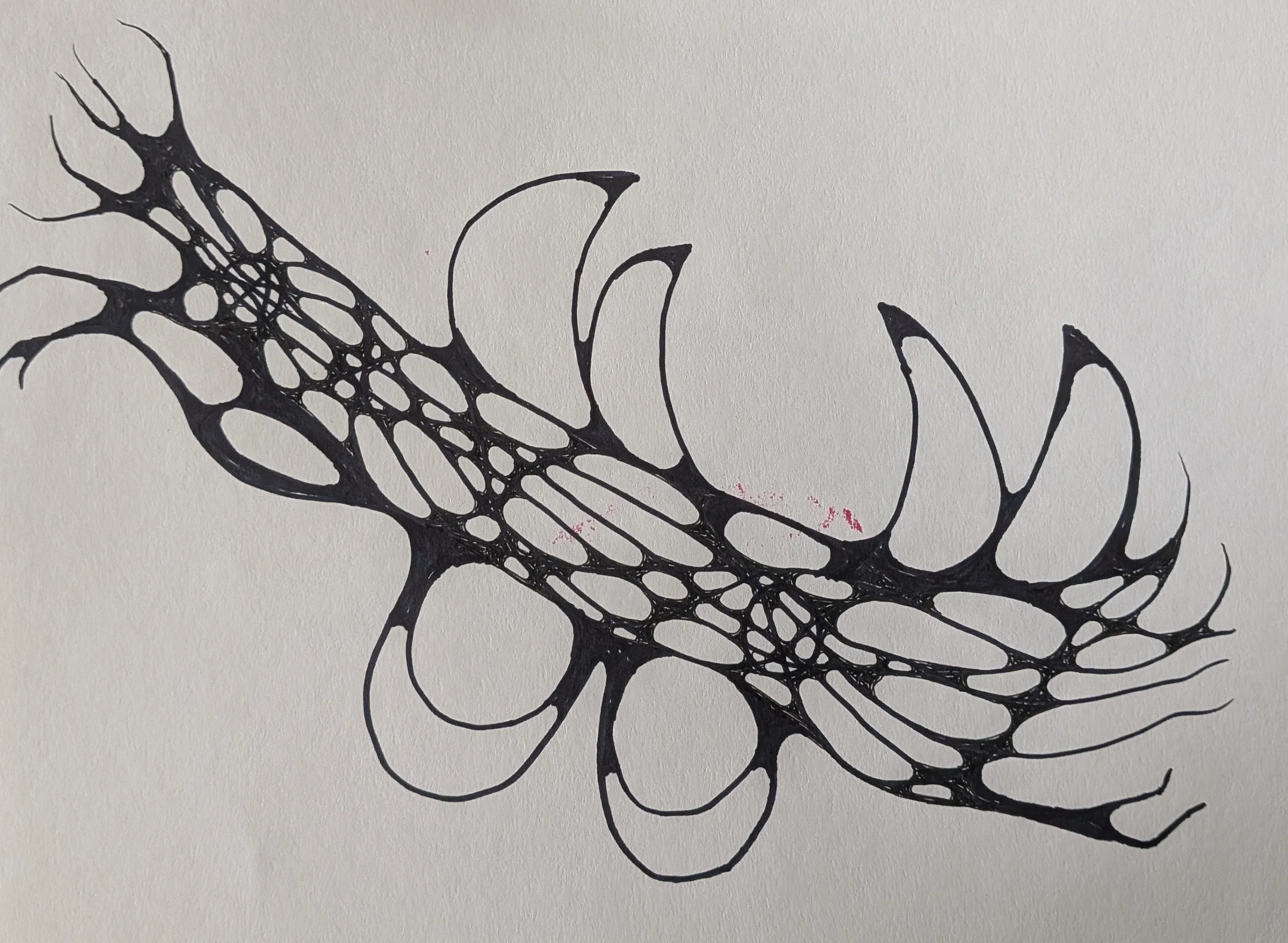
Next comes a meditative process of softening every sharp intersection by rounding the corners. As I work, unexpected shapes begin to emerge—figures, creatures, plants, patterns, or something I may not have anticipated at all. I follow those discoveries, adding lines and developing the forms that reveal themselves.
At this stage the drawing is entirely black and white. Only when the line work feels complete do I begin adding color with alcohol ink pens. The colors are bright and quick-drying, and I let the emerging subject suggest where they belong.
Finally comes one of my favorite parts: the title. I love words, and the whimsical images that emerge often seem to have personalities—and names—of their own.
For me, the process transforms the energy of the original thought or concern into something colorful, playful, and often surprising. What began internally as something that felt large has become an image outside of me—one that can serve as a reminder to lighten up, shift perspective, and see things differently. Hopefully you, the viewer see something in it that appeals to your perspective.
Paintings
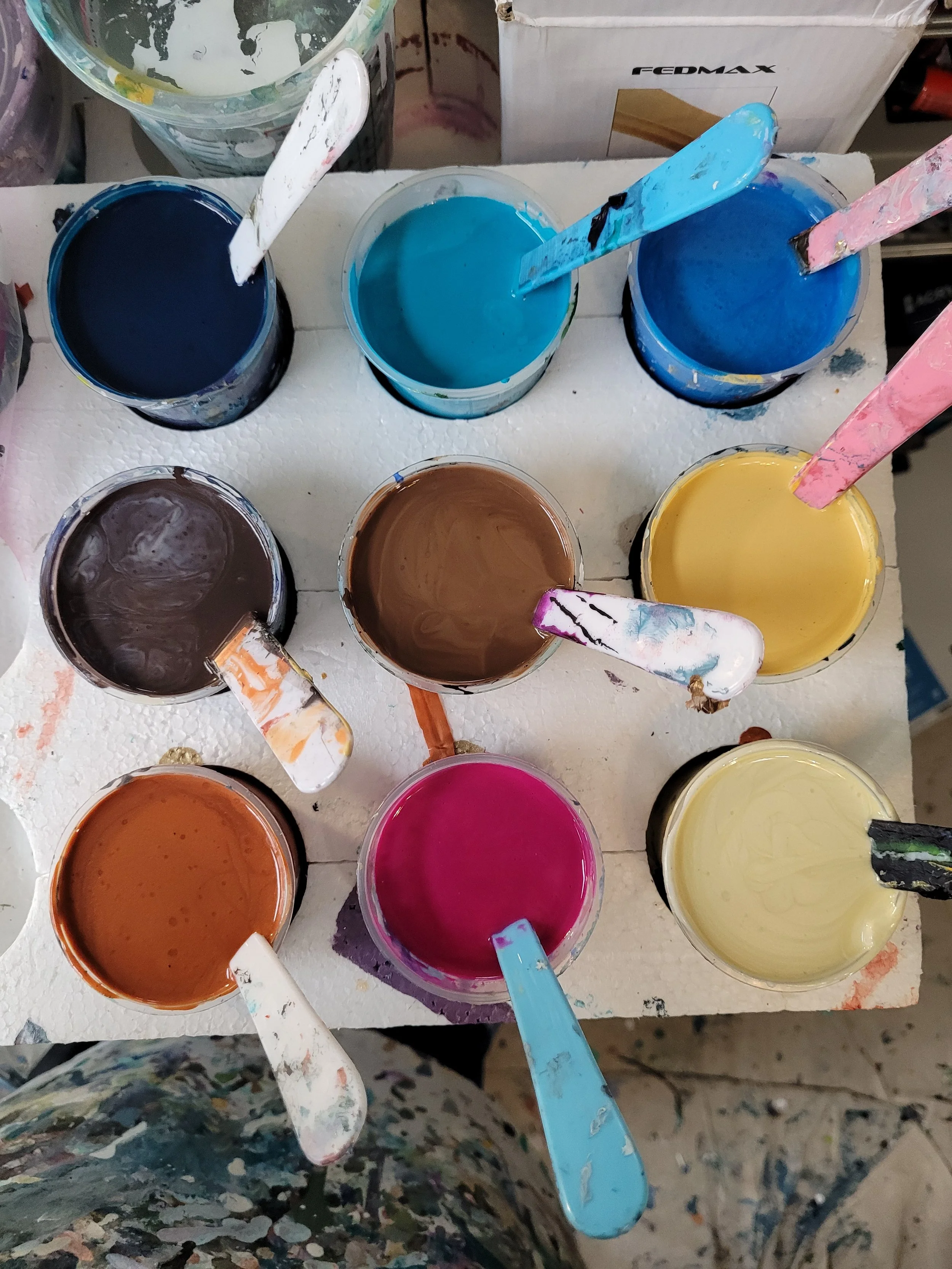
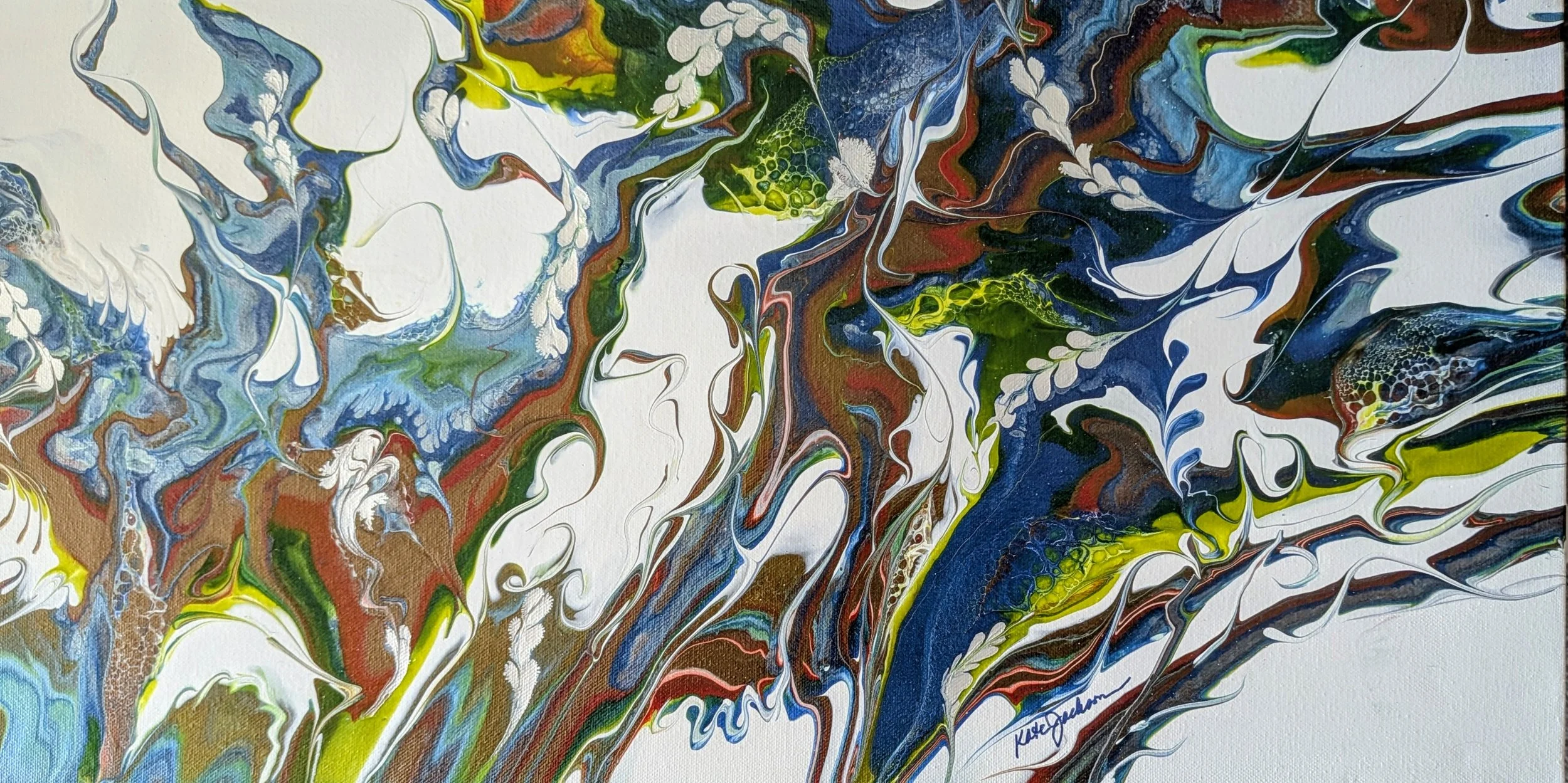
My paintings begin at the opposite end of the creative process: with color.
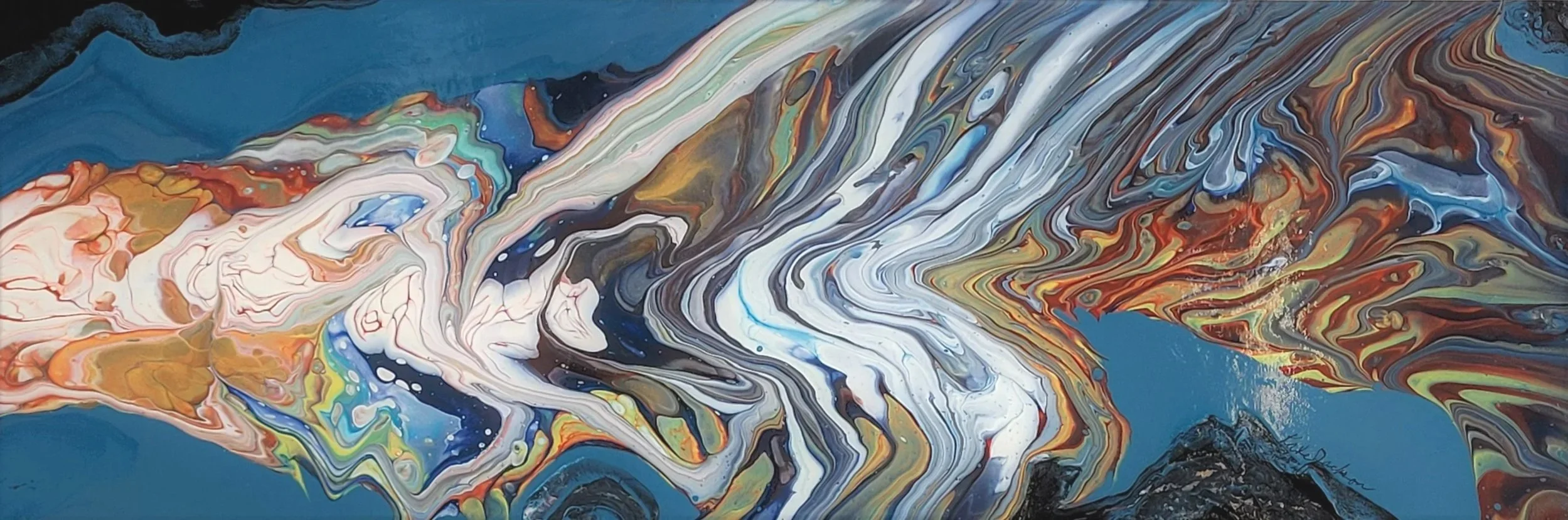
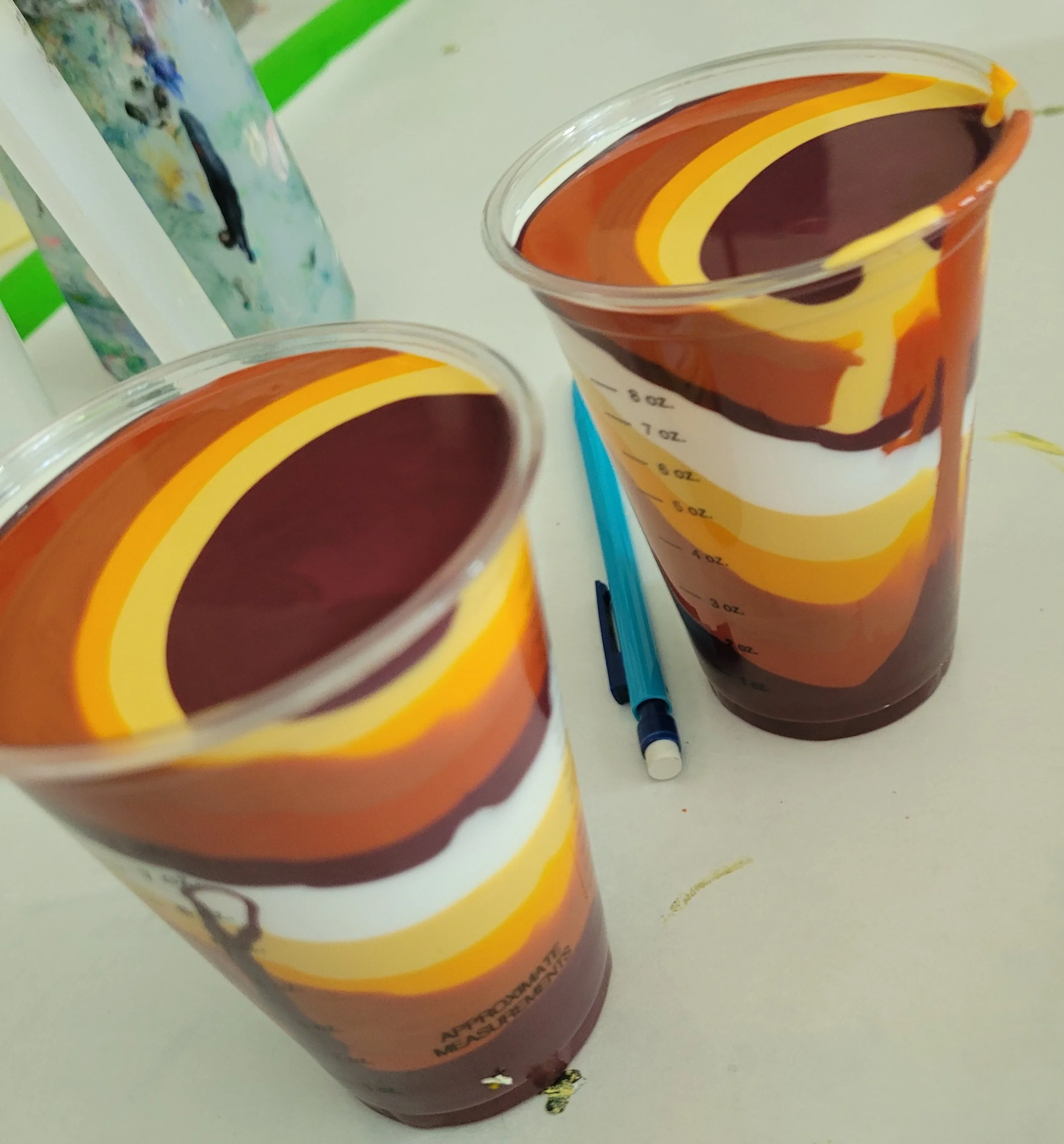
Rather than beginning with an idea of what the painting will become, I choose colors intuitively and allow them to move and interact across the canvas. I am interested in the relationships that develop—the movement, unexpected combinations, patterns, and little surprises that happen when one color encounters another.
As the painting develops, I respond to what is happening on the canvas as I manipulate it, rather than trying to impose a predetermined image upon it. Shapes and areas of interest begin to emerge, and I work with them, allowing intuition to guide what stays, what changes, and when the painting feels complete.
Occasionally a recognizable form or subject appears, but most of my paintings remain non-objective expressions of emotion, movement, color, insight, and intuition.
So while my drawings begin internally—with thought, line, and black and white—and eventually find their color, my paintings begin internally— with color and movement allowing their own forms and meaning to emerge. So much for Artist speak!